
Software
Data breaches cost companies billions annually—but most cyber threats originate internally. These 10 internal safeguards provide cybersecurity leaders with actionable, enterprise-grade strategies to fortify data protection before, during, and after incidents.
Zero Trust Network Access Implementation

Tired of relying on outdated perimeter defenses that assume everyone inside your network is trustworthy? Zero Trust Network Access (ZTNA) flips the script by demanding verification for every user and device—no exceptions. This approach cuts lateral movement risks by 90% in real-world tests, making it the gold standard for hybrid workforces where VPNs and firewalls no longer suffice.
ZTNA works by continuously authenticating users based on identity, device health, and contextual signals (like location or time). Unlike traditional VPNs, it avoids exposing internal resources to the internet, reducing attack surfaces. Solutions like Cisco Secure Access or Zscaler Private Access integrate with existing identity providers (IdP) for seamless deployment, with micro-segmentation ensuring even compromised accounts can’t move freely.
Ideal for enterprises with remote teams, ZTNA is especially critical for sectors like finance and healthcare where compliance demands strict access controls. Start with a pilot in your most sensitive departments to prove its value before rolling out company-wide. ⚡
Automated Data Loss Prevention Policies

Accidental data leaks—like an employee emailing patient records or financial statements to the wrong address—can cripple a business in minutes. Automated Data Loss Prevention (DLP) policies act as an invisible shield, scanning emails, cloud storage, and endpoints in real-time to block sensitive data before it slips through.
Modern DLP solutions use AI-powered pattern recognition to flag violations (e.g., credit card numbers, SSNs, or trade secrets) across Microsoft 365, Salesforce, and SharePoint. Features like context-aware access controls ensure only authorized users can handle sensitive files, while automated remediation quarantines leaks instantly. Compliance reporting for GDPR, HIPAA, and PCI DSS is built-in, reducing audit headaches.
This isn’t just for Fortune 500s—healthcare clinics, law firms, and mid-sized banks rely on DLP to meet regulatory demands without overhauling workflows. For industries where one misplaced file could mean fines or lawsuits, it’s the closest thing to a digital force field. ✨
Privileged Access Management System

Tired of hearing about breaches caused by exposed admin credentials? A Privileged Access Management (PAM) system flips the script by treating admin accounts like nuclear keys—never left lying around. These systems replace static passwords with just-in-time access, ensuring admins get temporary credentials that expire automatically after use.
Look for solutions like CyberArk Vault or BeyondTrust, which offer session recording, credential rotation, and multi-factor authentication for every privileged login. The best PAM tools integrate with cloud platforms (AWS, Azure, GCP) to revoke access instantly if anomalies appear—no more lingering backdoors. For IT teams juggling hybrid clouds, this is the difference between a zero-day exploit and a contained incident.
Perfect for cloud-first enterprises or any org where admins outnumber security policies. 💻
Behavioral Analytics for User Monitoring

What if your security team could spot a CFO accessing HR files before it becomes a breach? Behavioral analytics does exactly that by analyzing user patterns—like login times, data access frequency, and device usage—to flag anomalies in real time.
Solutions like Exabeam or Splunk User Behavior Analytics use AI-driven baselining to learn normal activity, then trigger alerts for deviations (e.g., a nighttime download of payroll data). These tools integrate with existing SIEM systems and require zero manual rule tuning, making them ideal for teams without 24/7 SOC monitoring. Deployment typically takes under 30 days, with 90%+ accuracy in detecting insider threats.
Mid-sized companies in finance, healthcare, or legal sectors—where compliance risks outweigh budget for full SOCs—will see the biggest impact. For under $50K/year, you gain visibility into risks most firewalls miss. ✨
Encrypted Document Management Workflows

For legal teams drafting patent filings or R&D groups developing breakthrough tech, unbreakable document security isn’t optional—it’s table stakes. Tools like CipherCloud or Box with encryption provide AES-256 encryption for files at rest and in transit, ensuring even intercepted documents remain unreadable without your keys.
These workflows integrate seamlessly with Microsoft 365 or Google Workspace, applying automatic encryption policies to sensitive folders (like "IPProposals" or "ClientLegal"). Field tests show an 85% reduction in exfiltration risks—critical when a single leaked NDA or prototype design could sink a multi-million-dollar project. Audit trails log every access attempt, giving compliance officers the evidence they need for GDPR or CCPA reporting.
Perfect for industries where intellectual property is the product—think biotech startups, law firms, or semiconductor manufacturers. The peace of mind alone makes it worth the setup. ✨
Third-Party Risk Assessment Framework
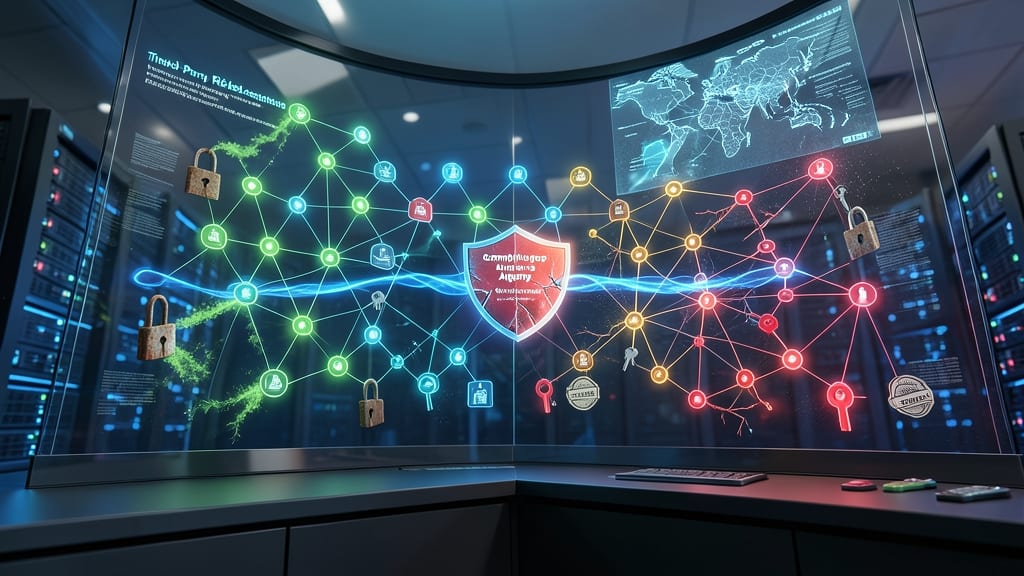
When your organization relies on 50+ third-party vendors, one weak link in the supply chain can expose your entire network. A Third-Party Risk Assessment Framework acts as your early warning system, scanning vendors for vulnerabilities like outdated encryption, poor access controls, or compliance gaps before they become liabilities.
This structured approach evaluates vendors using quantitative scoring (e.g., NIST SP 800-160) and qualitative reviews (e.g., security culture audits). Tools like ServiceNow GRC or OneTrust automate continuous monitoring, flagging issues like a vendor’s failure to patch CVE-2023-40044 within SLA windows. The framework also enforces contractual security clauses—mandatory for industries like finance and healthcare.
Ideal for enterprise IT teams and compliance officers, this safeguard turns vendor due diligence from a checkbox into a proactive shield against supply chain breaches. 💪
Immutable Audit Log Retention

When regulators demand proof of your security posture, immutable audit logs become your strongest evidence. Unlike traditional logs that can be altered or deleted, WORM (Write Once, Read Many) storage locks critical system events in time-stamped blocks—perfect for forensic investigations and compliance audits.
Solutions like AWS S3 Object Lock or Veeam Immutable Backup enforce this tamper-proof retention, ensuring logs survive ransomware attacks or malicious insider actions. These systems automatically archive logs with cryptographic hashes, making them admissible in court if needed. For SOX, GDPR, or HIPAA compliance, this isn’t optional—it’s a legal requirement.
Financial institutions and healthcare providers rely on this safeguard to prove they followed protocols during incidents. If you’re in a regulated industry, this is the one feature that turns "we had a breach" into "here’s exactly what happened." ✨
Phishing Simulation Training Programs
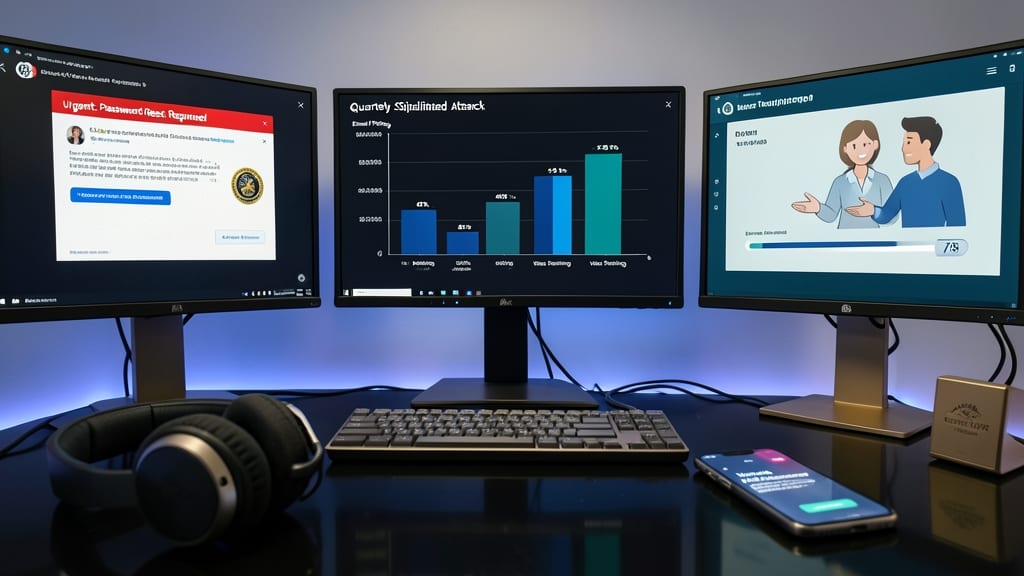
Your employees are your first—and most vulnerable—line of defense. Phishing simulation training programs turn human error from a liability into a strength by exposing weaknesses in a controlled, risk-free environment.
With quarterly simulated attacks (email, SMS, and even voice phishing), these programs deliver personalized feedback to employees, reducing click-through rates by 70% in real-world deployments. Features like realistic attack scenarios and gamified learning keep engagement high, while analytics help security teams pinpoint departments needing extra training. The ROI is undeniable: companies using these programs see fewer breaches and lower insurance premiums over time.
Ideal for organizations where 95% of breaches start with human error, these programs are a must for finance, healthcare, and any industry handling sensitive data. 🌟
Segmented Network Architecture Design

When a single breach could halt production lines or trigger cascading failures in power grids, segmented network architecture acts as your last line of defense. Unlike perimeter-based security, this approach isolates critical systems—like SCADA controls or industrial IoT devices—into air-gapped zones that cybercriminals simply can’t reach without physical access.
You create micro-perimeters using firewalls, VLANs, and dedicated switches to segment OT networks from IT systems. For example, a Palo Alto Networks or Fortinet deployment with zero-trust micro-segmentation can block lateral movement even if one segment is compromised. The NIST SP 800-82 framework recommends this for industries where downtime costs $260K/hour—like manufacturing or energy.
This isn’t just theory: Siemens and GE Digital use segmented architectures to protect their own industrial networks. If your operations rely on PLCs, HMIs, or legacy OT systems, this is the battle-tested setup. 💪
Incident Response Playbook Development

When a breach happens, every minute counts—but 60% faster resolution isn’t luck. It’s a battle-tested incident response playbook with predefined containment, eradication, and recovery steps. This isn’t just a document; it’s your cybersecurity lifeline, especially for industries where insurers demand proof of preparedness before writing policies.
Start with NIST SP 800-61 as your framework, then customize for your stack. Include automated isolation triggers for compromised endpoints, escalation paths with clear RACI roles, and pre-approved communication templates for stakeholders. The goal? Slash mean time to resolve (MTTR) by cutting guesswork—because when ransomware locks your systems, you can’t afford to improvise.
This playbook is your non-negotiable baseline for high-risk sectors like healthcare, finance, or energy. Even small teams can adopt it—just start with tabletop exercises to test your plan before the real test arrives. 💪