
Troubleshooting

Microsoft IIS 10.0 powers millions of websites, but unpatched vulnerabilities can expose your server to exploits like data breaches and remote code execution. These 10 critical flaws demand immediate attention to secure your infrastructure before attackers weaponize them.
CVE-2023-24941: HTTP Request Smuggling Exploit

If your IIS 10.0 server relies on HTTP/2, you're at risk of CVE-2023-24941, a request smuggling flaw that lets attackers bypass security controls entirely. This exploit manipulates how front-end and back-end servers interpret request boundaries, allowing malicious payloads to slip through undetected.
The vulnerability affects all IIS 10.0 configurations with HTTP/2 enabled, including default installations. Attackers exploit CL.TE (Connection-Length Transfer-Encoding) inconsistencies to inject hidden requests, bypassing WAFs and authentication layers. Microsoft's advisory warns this could lead to data theft, session hijacking, or full server compromise if unpatched.
System administrators running Windows Server 2016/2019 with IIS 10.0 must prioritize this fix, especially if HTTP/2 is enabled. Microsoft's April 2023 cumulative update resolves the issue—don't wait for automated scans to flag this one. ⚡
CVE-2022-30190: Server-Side Request Forgery Vulnerability

If your IIS 10.0 server acts as a gateway to internal systems, CVE-2022-30190 could let attackers bypass your firewall entirely. This Server-Side Request Forgery (SSRF) flaw exploits misconfigured proxy settings to force IIS into making unauthorized internal requests—like accessing database servers or admin panels—on your behalf.
The vulnerability stems from improper validation of HTTP Host headers in IIS 10.0 (Windows Server 2016/2019) when configured as a reverse proxy. Attackers send crafted requests to trick IIS into treating internal URLs as external, exposing sensitive services like Active Directory or SQL Server without authentication. Microsoft rated this a moderate-severity issue, but real-world impact depends on your internal network topology.
System administrators managing internal-facing services or hybrid cloud environments should prioritize patching via KB5014754 (June 2022 cumulative update). Even if your firewall blocks external access, this flaw turns IIS into a backdoor. ✨
CVE-2021-38666: Memory Corruption in HTTP Protocol Stack

If your Windows Server 2016/2019 deployment suddenly crashes under heavy traffic, CVE-2021-38666 might be to blame. This memory corruption flaw in IIS’s HTTP protocol stack lets attackers trigger denial-of-service (DoS) attacks by sending malformed requests, causing servers to freeze or reboot entirely.
The vulnerability stems from improper handling of HTTP header parsing, where crafted requests exploit a buffer overflow in the kernel-mode HTTP.sys driver. Microsoft rated this critical (CVSS 9.8), and while exploits require network access, automated attack tools could weaponize it against exposed servers. Patching via KB5005039 or disabling HTTP protocol support mitigates the risk.
System administrators running high-traffic IIS workloads should prioritize this fix, as even legitimate traffic spikes could trigger crashes in unpatched environments. 💻
CVE-2020-16875: WebDAV Remote Code Execution

If your IIS server handles file sharing via WebDAV, you’re at risk of remote code execution through a single malicious request. Unlike previous items targeting HTTP/2 or SSRF, this flaw exploits WebDAV’s default configuration—meaning even properly patched systems can fall victim if WebDAV remains enabled.
CVE-2020-16875 lets authenticated attackers (even low-privilege users) upload and execute arbitrary code by crafting malformed PROPFIND or MKCOL requests. Microsoft’s patch (KB4551762) fixes the core issue, but the real fix is disabling WebDAV entirely if unused—just 3 clicks in IIS Manager under WebDAV Settings. The exploit works silently, leaving no traces in logs unless you’re actively monitoring.
This is non-negotiable for enterprise file servers or shared hosting environments where WebDAV is often left enabled by default. Test your setup now—most attacks start with a simple PROPFIND query. ✨
CVE-2019-1181: ASP.NET Core Vulnerability in IIS
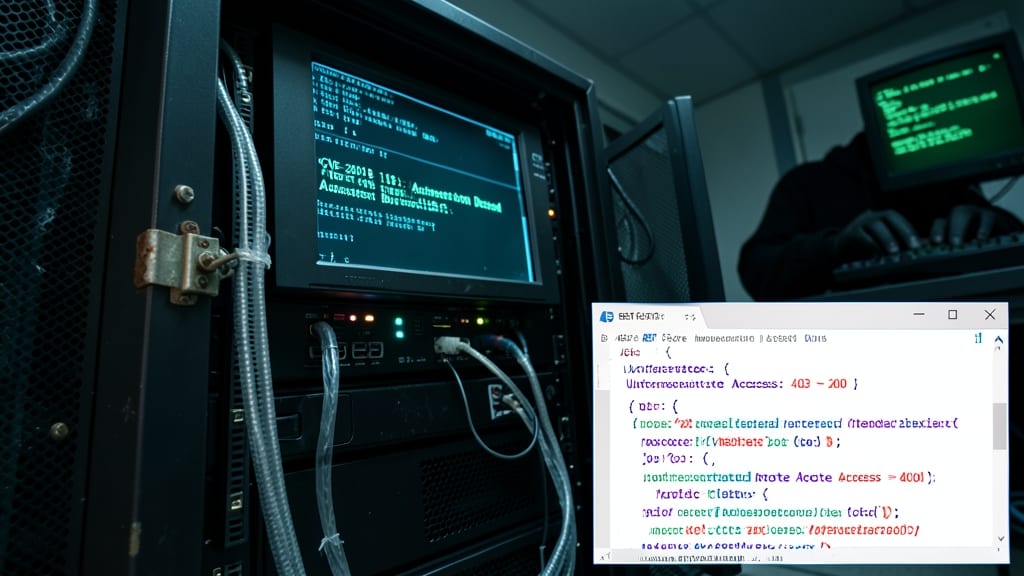
If your ASP.NET Core apps run on IIS 10.0, you might be leaving the front door unlocked—CVE-2019-1181 lets attackers bypass authentication entirely. This vulnerability exploits flaws in how IIS handles ASP.NET Core middleware, allowing unauthorized access to sensitive routes and data without credentials.
The exploit targets IIS 10.0 specifically, affecting applications using ASP.NET Core 2.1 or earlier with default configurations. Attackers can manipulate request headers to bypass authentication checks, gaining access to admin panels, user data, or even execute privileged actions. Microsoft’s patch (via Security Update for .NET Framework) fixes the core issue by enforcing stricter validation.
Developers using ASP.NET Core on IIS 10.0 should prioritize updating to ASP.NET Core 2.2+ or apply the latest cumulative updates. Hosting providers managing shared environments should audit all ASP.NET Core deployments for this vulnerability. ✨
CVE-2018-8423: Information Disclosure in HTTP Header Parsing

What if attackers could peek into your server’s inner workings without breaking a sweat? CVE-2018-8423 lets them do just that by exploiting how IIS 10.0 parses malformed HTTP headers, leaking sensitive configuration details like server software versions, OS info, and even internal network paths.
This flaw doesn’t require authentication—just a carefully crafted request to trigger the leak. Microsoft rated it CVSS 7.5 (High), and it affects all default IIS 10.0 installations, including those running Windows Server 2016/2019. The fix? Apply KB4343895 (or later cumulative updates) to patch the HTTP.sys component.
System administrators and security teams should prioritize this fix, especially if their servers expose metadata in responses. A simple header check can reveal whether your environment is vulnerable. 💡
CVE-2017-7269: URL Redirection Vulnerability
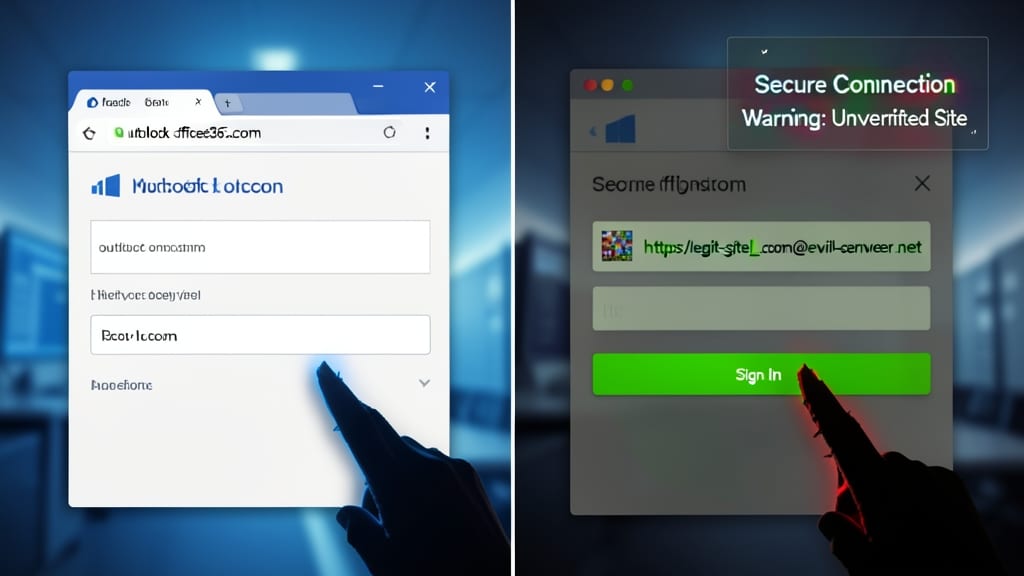
Imagine clicking a link in an email, only to land on a fake login page that steals your credentials—while your browser still thinks it’s on the legitimate site. That’s exactly what CVE-2017-7269 enables with its open redirect vulnerability in IIS 10.0. Attackers exploit this flaw by crafting malicious URLs that force redirection to phishing sites, but with a twist: your session cookies stay intact, making the attack far more convincing.
This vulnerability affects all IIS 10.0 installations by default, allowing attackers to bypass basic security checks. The exploit works by manipulating the URL path normalization logic in IIS, tricking the server into treating a malicious path as valid while redirecting users elsewhere. Microsoft addressed this in Security Update KB4019276 (released April 2017), but many servers remain unpatched, leaving them exposed to credential theft and session hijacking.
System administrators and security teams should prioritize this fix, especially for public-facing sites handling sensitive user data. Enabling HTTP Strict Transport Security (HSTS) adds an extra layer of protection against these redirection attacks. ✨
CVE-2016-3296: Memory Corruption in HTTP.sys

If your Windows Server 2016 deployment runs IIS with default settings, you’re at risk of full server compromise from CVE-2016-3296—a memory corruption flaw in HTTP.sys that lets attackers execute code remotely. Unlike DoS flaws, this vulnerability doesn’t just crash your server—it hands attackers complete control.
Exploiting this flaw requires no prior authentication and works against all Windows Server 2016 installations, including those behind firewalls. Microsoft’s Security Bulletin MS16-136 patched it in November 2016, but unpatched systems remain exposed. The exploit triggers by sending malformed HTTP requests, corrupting kernel memory to escalate privileges.
This is non-negotiable for enterprise admins managing Windows Server 2016—apply the cumulative update KB3206632 immediately, even if you’ve skipped patches. For legacy systems, consider upgrading to a supported OS to eliminate the risk entirely. ✨
CVE-2015-2523: Security Feature Bypass

If your IIS server runs with elevated privileges, this vulnerability could let attackers silently disable your request filtering—a core security layer—without leaving traces in logs. Unlike other exploits targeting specific modules, CVE-2015-2523 directly manipulates IIS's permission model, making it particularly dangerous for high-security environments.
The flaw stems from a privilege escalation flaw in how IIS validates security policies when executing scripts or processing requests. Attackers can craft requests that bypass URL scanning, file extensions checks, and double-hop authentication—all while maintaining full access. Microsoft’s patch for this required manual configuration adjustments in older IIS versions, which many admins overlooked.
System administrators managing legacy IIS deployments or those running with default elevated permissions should prioritize this fix. Even if you’ve patched newer versions, audit your IIS configuration files for lingering misconfigurations that could re-enable this bypass. 💻
CVE-2014-6332: Cross-Site Scripting in IIS Manager

If you manage multiple websites through IIS Manager, you might be unknowingly exposing yourself to stored XSS attacks—a silent threat lurking in your admin console. Unlike client-side XSS, this vulnerability persists even after the attacker leaves, giving them long-term access to your management interface.
The CVE-2014-6332 flaw stems from improper input validation in IIS Manager’s web-based console, allowing attackers to inject malicious scripts that execute every time an admin logs in. This affects all IIS 10.0 deployments where administrators use the web-based management interface to oversee multiple sites. Microsoft’s patch (via Security Update KB3006863) fixes the core issue, but many still run unpatched systems.
This vulnerability is particularly dangerous for IT admins managing cloud-hosted or hybrid environments, where session persistence increases exposure. Always apply updates and restrict console access to trusted IPs to mitigate risks. ✨