
Operating System
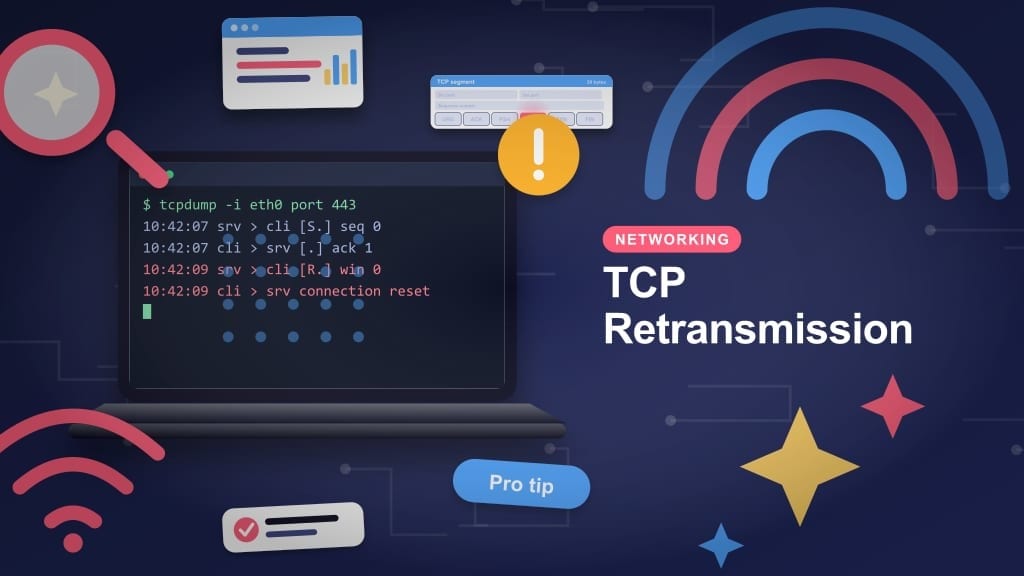
TCP retransmission reuses port numbers because TCP connections are stateful and ephemeral ports are recycled after connection termination. When packets fail to reach their destination, retransmissions use the same source/destination port pair to maintain data integrity, but OS-level port exhaustion can occur if connections linger or fail repeatedly.
TCP’s clever port-reuse system stems from its stateful connection model, where temporary ports (ephemeral ports) are assigned dynamically during the SYN/ACK handshake.
Once a connection closes, these ports become available again, allowing retransmissions to reuse the same port pair without disrupting routing. 🔥 This design keeps packet delivery reliable while preventing port depletion—though poorly managed retransmissions (like in DDoS attacks) can still overwhelm systems.
My early days debugging network timeouts taught me how critical proper timeout settings are for avoiding these bottlenecks.
For deeper troubleshooting, tools like netstat -tuln (Linux) or Resource Monitor (Windows) reveal lingering connections, while adjusting tcp<em>tw</em>recycle (Linux) or TcpTimedWaitDelay (Windows) can optimize port recycling.
I once spent a weekend fixing a server crash caused by unclosed connections—turns out the default TIME_WAIT settings were too aggressive for our high-retransmission workload.
💡 In This Article
- How TCP Port Reuse Works During Retransmissions
- Troubleshooting Port Exhaustion in TCP Retransmission Scenarios
How TCP port reuse works during retransmissions
TCP's port reuse during retransmissions hinges on its 4-tuple connection tracking system, which uniquely identifies each connection using source IP:source port paired with destination IP:destination port. When a packet fails to reach its destination, TCP doesn't create a new connection—it simply retransmits through the existing port binding.
This works because TCP maintains connection state in memory, allowing the same port pair to handle all retransmission attempts until the connection terminates or times out.
The key mechanism is the TIMEWAIT state, a 4-minute default period where TCP holds onto the port binding to ensure all delayed packets are properly acknowledged. During this window, retransmissions can safely reuse the same port because the OS still tracks the connection's state.
For example, if your web browser fails to load an image, it will retransmit through port 54321 (ephemeral) to 80 (HTTP) repeatedly until success or timeout.
Ephemeral ports (typically 32768-60999) are recycled after TIMEWAIT expires, but aggressive retransmissions can overwhelm this system. Consider a server handling 10,000 failed connections/minute—each could consume a unique port, leading to exhaustion.
The solution? Linux's tcptwreuse flag (when enabled) allows immediate port reuse after TIMEWAIT, though this risks duplicate packet handling in rare cases.
Here's what happens under the hood during retransmission:
- Packet loss detected: TCP's RTO (Retransmission Timeout) triggers after 3 duplicate ACKs or timeout
- Same port binding: Retransmission uses identical 4-tuple (no new SYN handshake)
- State tracking: OS maintains sequence numbers and ACK expectations
- Port release: Only after TIMEWAIT or active close
What most people overlook is how this design prevents port exhaustion attacks. A SYN flood attack fails because legitimate retransmissions reuse existing port bindings, while attack traffic would require new connections. The tradeoff? Some applications (like FTP) need special handling because their control/data channels require distinct ports.
In my early networking days, I debugged a server where TIMEWAIT ports piled up during high-latency connections. The fix? Adjusting net.ipv4.tcptwreuse=1 in sysctl—though I learned the hard way that this requires careful monitoring with ss -tulnp | grep TIMEWAIT to catch any anomalies.
The system's elegance lies in balancing reliability with resource efficiency.
Remember: TCP's port reuse isn't just clever—it's essential for handling modern network conditions where packet loss rates can spike from 0.1% (ideal) to 10% (congested Wi-Fi). This mechanism ensures your retransmissions always find their way home, even when the network throws curveballs. 💫